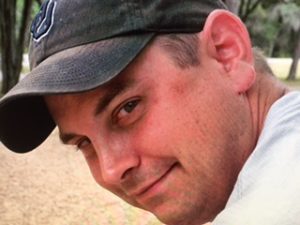
Tyler McGuire was my brother in law. He was a true friend and a bad ass. We all have difficulties in life and unfortunately Tyler was dealt the difficulty of bone cancer. We lost him in January of this year. I have attempted to accept a lot of difficulties in my own life but accepting that he has passed is at the top of the list. Tyler didn’t just get cancer, he battled it to the end. He believed in fighting the good fight and always encouraged me to keep moving forward no matter what. Tyler had a huge heart and was full of love. His spirit motivates me daily to give back and try to help others through my work as a counselor. Here’s to you brother, we love you and miss you.
I wrote the words below a few days after he died. Our friend, Phyllis, with the FUMC of Fort Worth, was kind of enough to read this for me at his funeral. Please see below. Thanks.
TYLER MCGUIRE – FROM BROTHER IN LAW, JEREMY RUDD. 1 26 17
I wanted to take a few minutes to express my love and gratitude for my brother in law, Tyler. I remember first meeting Tyler at a gas station in Bedford. Heather was going to introduce us that week but I happen to run into the cute couple while I had stopped to get gas. Tyler was just as Heather had described. As we know, Tyler was a man’s man and was also a really nice guy. After meeting Tyler and his family, it was easy to see why Heather was so crazy about him. Tyler greeted others with a hand shake and always made eye contact. He had manners and he was genuine. Shortly thereafter, our family met Barry, Mary and Andrew and they were of course a blessing just like Tyler was. They all had manners, love in their heart, and a sense of humor, just like our Tyler. Tyler was the real deal. I always told him that he was a God send. He and I became instant friends and soon starting calling each other a “brother from another mother.” He was so welcoming and fun to be around. He had that smile and confidence that was contagious. Tyler is one of the most generous and thoughtful people I have ever known. It didn’t matter what he was doing, if he thought I might have some interest in doing it with him he would invite me. It could be a camping trip, a drive to look at a house for his business, or just taking a ride to the auto parts store. There were countless times when Tyler just insisted on paying for lunch or dinner. If Tyler had it, it was a given that he would be sharing it with his family or friends. With Tyler, you just knew you had a wing-man for life. He showed these same characteristics as a dad, a son, a husband, a brother and so on. Tyler was gonna be there for his family and friends no matter what. He was the guy that you could call at 3 in the morning stranded in another state and he was gonna show up and help. I always appreciated Tyler’s passion. It didn’t matter if it was baseball, the right to bear arms, or a brand of beef jerky, you knew where Tyler stood. I can still remember the glow in his face on the days Sydney and Jack were born. It was the same glow he had in October 2004 when he married our wonderful Heather. We could be driving somewhere and see some random piece of metal stuck in the ground or an unusual looking piece of equipment on a flatbed truck. I would usually have to ask him what it was. He always had an answer. He could do just about anything he put his mind to. If it was a project or task he didn’t know how to do then he would soon do what it to took to learn it on his own then get the job done. A few minutes later, he could make someone smile. Then he might tell you about a movie he watched last week and how he felt the film had a Mark Twain feel to it. I can remember being his helper on occasion when he would go check on a property for his home preservation business. I have seen him tackle a project with relative ease countless times. One day stands out in particular. We show up at a house and Tyler says we have to build a swimming pool cover. I’m no handy man, but when I saw the size of the pool I immediately asked him how we were gonna get to the other two jobs he had scheduled for the day. As usual, he told me not to worry about it and to let him figure that out. Less than two hours later, Tyler had that pool cover built. I have had my share of car trouble. Tyler was there regardless of the day or time. A few months after he started chemotherapy, we were talking and I had brought up that my car wouldn’t start at my office in downtown Dallas. I was going to have to call a tow truck. He immediately said that he would be picking me up in the morning and that we were going to Dallas to try to get the car started. I tried to talk him out of it worrying that he wasn’t feeling well enough and he wouldn’t listen to any of that. As we all know, when he made his mind up about something, there wasn’t a lot of convincing him other wise. He brought his cane and some tools and he drove us to Dallas. He was a little unsteady on his feet so I held the tools and tried to hold onto him as he was looking under the hood. He was always there for me when I was in a tough spot. Over the past few years, I have tried to hold Tyler up when he was in a tough spot, just as he has done for me from day one of our friendship. No matter the topic, Tyler would listen to you. We all know he would often give his opinion, but he would listen. A few years back I got the word “VERITAS” tattooed on my arm. This was something I did with Tyler in mind. Veritas means “truth” in Latin. This was a reference from one of our favorite movies, The Boondock Saints. He and I often talked about it and it was a bond that we always shared. To me, Tyler was truth. He was true to his family and friends and true to his beliefs. Tyler McGuire, we love you brother and your incredible strength and light will shine through all of us the rest of our days. We will continue to see your spirit in Jack and Sydney and we all look forward to seeing you again. I will look forward to talking to you about the Rangers pitching rotation and hearing you laugh again. The first time I ever heard anyone outside of church use the term “salt of the earth”, it was Tyler telling me about his brother Andrew before I had the pleasure to meet him. A few days ago a kind gentleman from the church was delivering food to my sister’s house when I was leaving. My mom and I shook his hand and thanked him for bringing food over for our family. I walked him to the door and we started to talk about Tyler. We chatted for about a minute before I ran out of words. I shook the man’s hand, thanked him, and then I said, Tyler was “the salt of the earth.”
I love you, brother.
Jeremy